Octopus EV Charging Daytime Slots: How the Cheap Windows Work
Last Updated: July 1, 2026
Intelligent Octopus Go can schedule EV charging outside the standard 23:30 to 05:30 window, and when it does, those extra slots are billed at the same cheap smart charging rate of 8p/kWh. The system decides when to allocate them based on your car's battery level, your set departure time, and grid conditions.
Key point: these daytime slots are a feature of the smart scheduling, not a guaranteed daily entitlement. You cannot force them, but you can set things up so the system is more likely to offer them.
Intelligent Octopus Go can sometimes schedule EV charging outside the standard 23:30 to 05:30 window, and when it does, those extra slots get the same cheap 8p/kWh rate. These daytime slots are a feature of the smart scheduling algorithm, not a guaranteed daily entitlement. This guide explains how the trick works, what makes extra slots more likely, and the whole-house benefit that makes them worth paying attention to.
Quick Answer: Do Octopus EV Charging Daytime Slots Actually Happen?
Yes. Octopus EV charging daytime slots are a real feature of Intelligent Octopus Go. The system can generate extra cheap charging windows during the daytime when conditions allow it. When you plug in a compatible EV or charger and set a target charge level with a departure time, Octopus builds a smart schedule. If your car needs more charge than the core overnight window can deliver, the system may extend the cheap rate into slots before 23:30 or after 05:30.
The important word is “may.” These daytime slots are dynamic. They depend on how much charge your car needs, when you need it by, and what the grid looks like at the time. One day you might get an extra hour at 8p/kWh in the late evening. The next day you might not. Treat them as a bonus, not a line item in your budget.
How the Smart Scheduling Creates Daytime Slots
Octopus EV charging daytime slots are not something you select from a menu. They are a by-product of how the smart scheduling algorithm works. Intelligent Octopus Go connects directly to your car or home charger instead of using a fixed timer. You tell the Octopus app two things: how full you want the battery and when you need the car ready. Octopus then builds a charging schedule that spreads the charge across the cheapest and most grid-friendly windows.
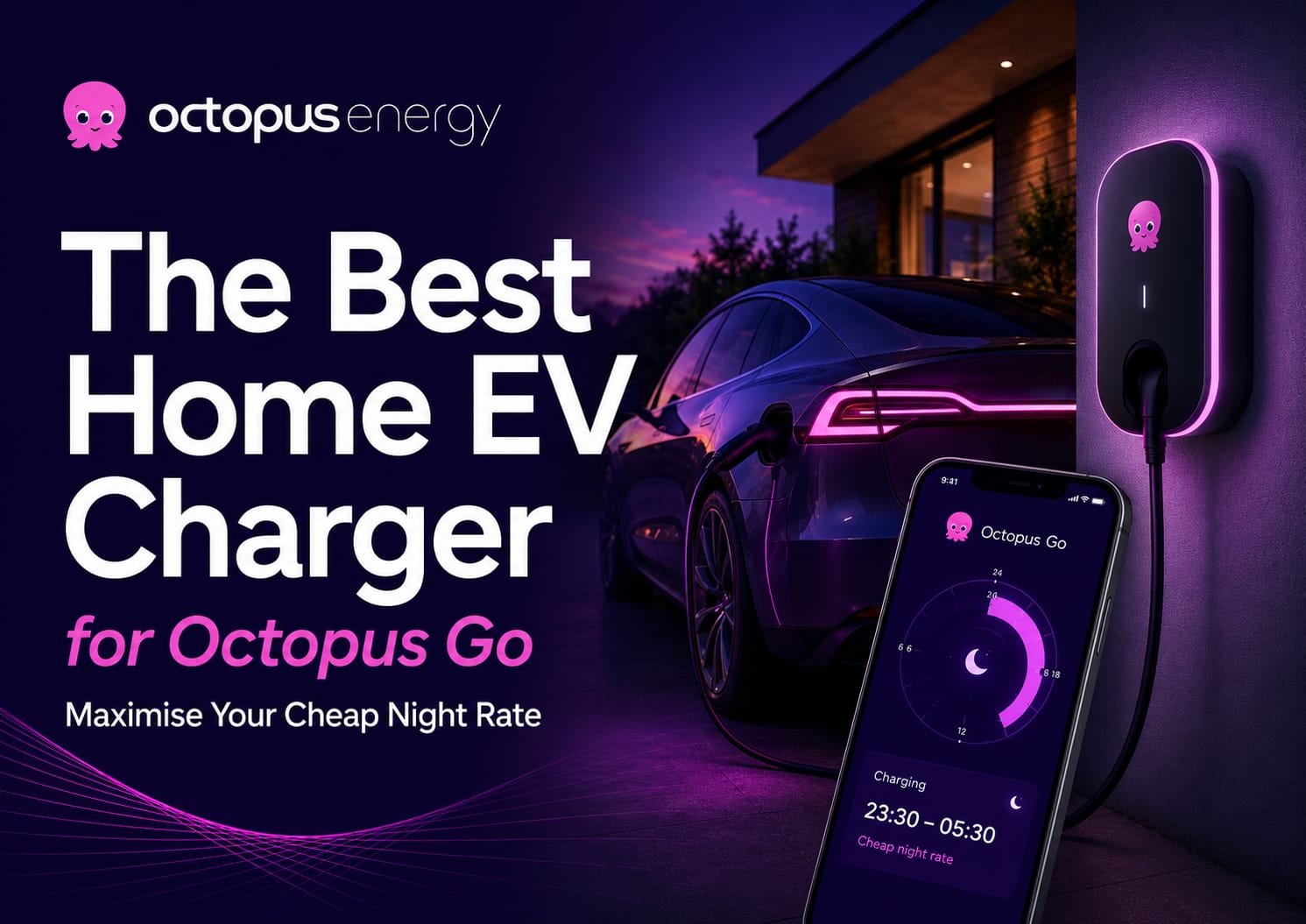
The standard cheap window runs from 23:30 to 05:30. That is six hours. On a typical 7kW home charger, that delivers around 42kWh, which is enough for most daily driving. But if your car needs more than those six hours can deliver, or if the grid conditions favour it, Octopus can schedule additional half-hour slots outside the core window. Those extra slots get the 8p/kWh rate.
The system is not just looking at your car. It balances grid demand, renewable energy availability, and wholesale pricing. When there is plenty of wind or solar on the grid and demand is low, the algorithm has more room to offer extra cheap slots.
What You Need to Qualify
You need Intelligent Octopus Go, not the standard Octopus Go. IOG requires either:
- A compatible EV (Tesla, BMW, Mercedes, Jaguar, Audi, and others on Octopus's approved list)
- A compatible smart charger (Ohme, Wallbox, Indra, and others)
If your car or charger is not on the list, you can only get standard Octopus Go with its fixed four-hour cheap window. No smart scheduling, no daytime slots.
You also need a smart meter. Without one, Octopus cannot measure your half-hourly usage and the whole tariff does not work.
How to Make Daytime Slots More Likely
You cannot demand an extra slot, but a few things tilt the odds in your favour.
Set a realistic departure time and a high charge target. If you plug in at 6pm with the battery at 20%, set the target to 100%, and tell the app you need the car by 7am, the system sees a large charging need and a tight window. It may pull some of that charging forward into the evening. If you set a lower target or a later departure, the system has more breathing room and fewer reasons to allocate extra slots.
Use a slower charger. A 7kW home charger gives the system more half-hour slots to work with compared to an 11kW or 22kW charger. Slower charging means more scheduling flexibility, and more flexibility means more chances for the system to dip into daytime hours.
Plug in early. The earlier you connect, the more windows the system can consider. If you plug in at 6pm rather than 11pm, the system has five extra hours of potential slots to work with. Some of those may be priced at the cheap rate if the conditions are right.
Do not keep unplugging and replugging. Every time you disconnect, the schedule resets. Plug in once and leave it. Constant reconnection tells the system you are not a reliable schedule follower, and it may deprioritise you.
Run appliances during scheduled slots. If you see a cheap slot appear in the Octopus app, that is your cue. The washing machine, dishwasher, tumble dryer, and immersion heater can all run at 8p/kWh during those windows. This was historically one of the most valuable parts of the tariff, though Octopus has made changes to how whole-house usage is billed during extra slots, so check the current terms in your account dashboard.
What Not to Expect
The most common complaint on EV forums comes from people who saw a daytime slot once, assumed it was permanent, and built their routine around it. Intelligent tariffs are, by design, not fixed. They respond to conditions. A slot that appeared on a windy Tuesday afternoon might not appear on a still Thursday.
Also worth knowing: Octopus has tightened the algorithm over time. Early adopters in 2023 and 2024 reported more generous scheduling. By 2026, the system is smarter about preventing deliberate gaming. People who connected home batteries and tried to charge them during every smart slot have, in some reported cases, had their accounts reviewed. The tariff is designed for EV charging. Pushing it beyond its intended use is not a strategy to rely on.
How It Compares to Other Octopus Tariffs
If you want a guaranteed cheap window and do not care about smart scheduling, standard Octopus Go gives you four hours from 00:30 to 04:30 at a similar cheap rate. No app connection needed, no compatibility list, no algorithm deciding your fate.
If you are willing to track half-hourly prices actively, Octopus Agile can sometimes beat 8p/kWh during negative pricing events, though those are rare and require you to shift usage aggressively. Agile is not an EV tariff. It is a wholesale price tracker with all the volatility that implies.
For most EV owners, Intelligent Go hits the sweet spot. Set up once, plug in, and let the system decide. The daytime slots are a bonus feature of that setup, not the main reason to choose the tariff.
Common Questions
Can I force Octopus to give me a daytime charging slot?
No. The algorithm decides based on your car's charge needs, the departure time you set, and grid conditions. There is no button in the app that says “give me cheap electricity now.” The best you can do is set things up in a way that makes extra slots more likely: high charge target, early plug-in time, a realistic departure deadline, and a slower charger.
Does my whole house get the cheap rate during a daytime slot?
Historically, yes. When Octopus allocated an extra half-hour smart charging slot, the entire home's electricity usage during that slot was billed at the cheap rate. This was one of the tariff's most popular features. Octopus has made changes to how this works over time, and some users report that only the EV charging consumption now gets the cheap rate during extra slots. Check your account terms and your bill breakdown after a smart charge to confirm how it is being applied on your specific account.
Which cars and chargers work with Intelligent Octopus Go?
Tesla vehicles (Model 3, Model Y, Model S, Model X) are supported, along with selected models from BMW, Mercedes, Jaguar, Audi, and Volkswagen. Compatible chargers include Ohme, Wallbox, Indra, and several others. The full list is on Octopus's website and changes as new integrations are added. If your car and charger are both on the list, you can choose which one Octopus connects to. Most people use the car connection because it is simpler and reads the battery level directly.
What happens if I unplug during a smart charging schedule?
The schedule resets. Octopus stops the current session and starts fresh the next time you plug in. If you unplug and replug repeatedly, the system may treat your charging pattern as unpredictable and schedule fewer slots for you. The tariff works best when you plug in once and leave the car connected until it reaches the set target.
Is Intelligent Octopus Go worth it if I only charge once a week?
It depends on how much of your other electricity usage you can shift into the cheap overnight window. If you charge once a week but run a dishwasher, washing machine, and tumble dryer during the 23:30 to 05:30 window every night, the savings add up. If you charge once a week and all your other usage happens during the day at the standard rate, the maths is tighter. Standard Octopus Go with its lower commitment might be a better fit in that case.
How do daytime slots show up in the Octopus app?
Open the Octopus app and look at your charging schedule after plugging in. Any extra half-hour slots outside the standard 23:30 to 05:30 window will appear as additional charging blocks marked at the smart rate. The app shows the planned schedule before charging starts, so you can see what to expect. If no extra slots appear, the system decided the core overnight window was sufficient for your current charging need.
I have been on Intelligent Octopus Go since buying my 2021 Tesla Model 3 Long Range, and I see extra daytime slots maybe once or twice a week. They are not dramatic. Usually it is an extra hour tacked onto the end of the overnight window, or a slot in the early evening if I plug in with a low battery and set an early departure.
The real value of this tariff is not the occasional bonus slot. It is the 8p/kWh rate on six guaranteed hours every night, the set-and-forget scheduling, and the Electroverse public charging discount. The daytime slots are a nice extra. If you treat them as the main reason to sign up, you will be disappointed. If you treat them as a welcome bonus on top of an already strong EV tariff, you will be happy.
One thing I would recommend: check your bill after a few smart charges and confirm how the extra-slot billing is working. Octopus has adjusted the whole-house policy a few times, and what applied to someone on Reddit six months ago might not match your current account terms.

I’m Steven, founder of MoneyAppReviews. I test money apps, referral programs, and EV tools in real life before I write about them. I drive a 2021 Tesla Model 3 Long Range, use Octopus Intelligent Go for home charging, and regularly track costs, savings, and app performance over time. I focus on practical, evidence-based reviews that help people decide what is actually worth using, not just what pays the highest commission.